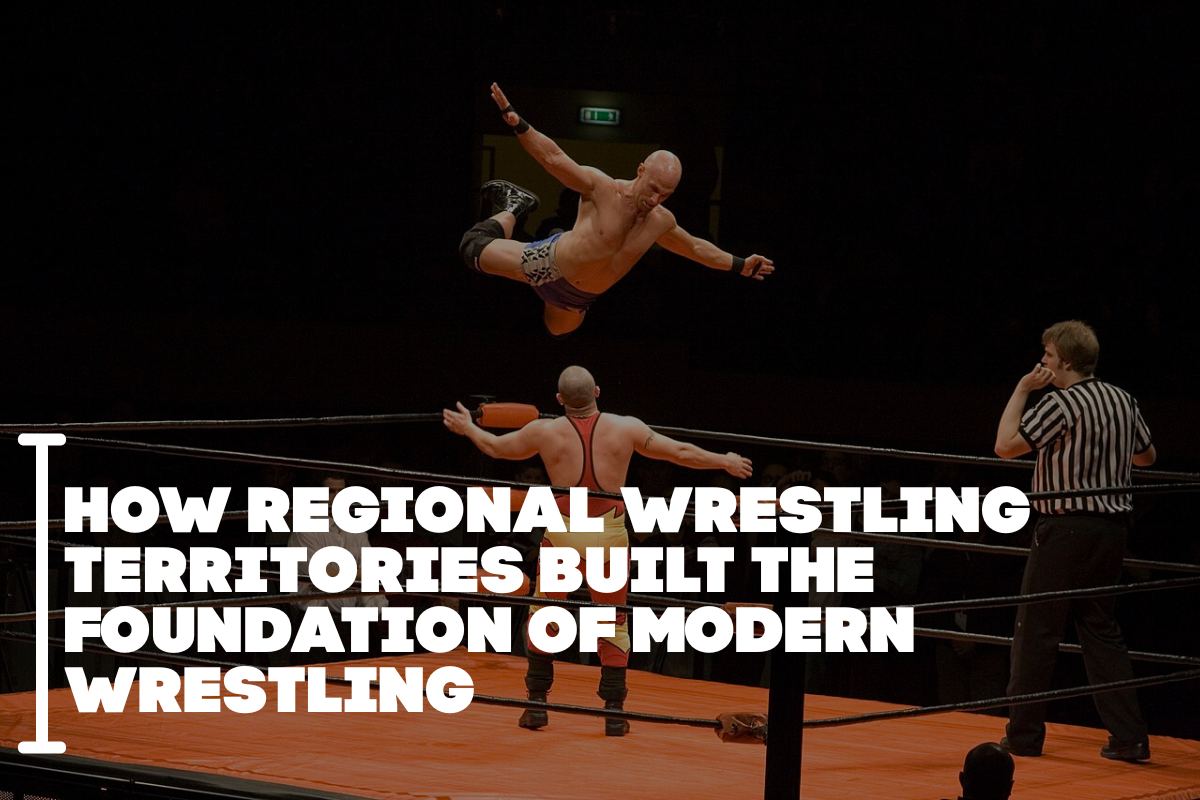
Television revolutionized professional wrestling in the 20th century, shifting it from regional carnival acts to a national spectacle by the 1950s and fueling the 1980s boom through cable and pay-per-view. Early broadcasts on networks like DuMont made stars accessible to millions, while Vince McMahon’s national syndication ended the territory system, creating empires like WWF.
Early Broadcasts on DuMont and NBC
Wrestling debuted on U.S. TV in 1948 with a match from New York City’s St. Nicholas Arena on the DuMont Network, drawing huge audiences for its drama and low production costs.

By the early 1950s, weekly shows on DuMont and NBC featured live arena bouts, introducing Gorgeous George—whose flamboyant robes and heel antics made him TV’s first wrestling superstar, boosting ratings despite cancellations by 1950-1955.
Regional TV and Territory Growth
Post-network era, territories thrived on local syndicated TV from the late 1950s-1970s, with shows like Memphis’ Championship Wrestling building feuds via weekly angles. This kept narratives fresh regionally but limited national reach until cable expanded signals, inadvertently weakening exclusivity.
Cable TV Sparks National Expansion
Vince McMahon capitalized on 1980s cable via WWF Superstars and Prime Time Wrestling, syndicated nationwide to bypass NWA territories. Hulk Hogan’s charisma shone on MTV crossovers, while pay-per-views like WrestleMania (1985) generated millions, turning wrestling into mainstream entertainment.
End of Territories and Global Reach

TV eroded the NWA’s handshake agreements as WWF poached talent and slots; by 1987, Jim Crockett’s JCP became WCW under Ted Turner. This model birthed modern WWE dominance and international exports.
Lasting Transformations
Television enhanced characters, storylines, and production values, evolving wrestling from sport to serialized entertainment watched by billions today.
FAQs
When was the first wrestling TV broadcast?
1948 on DuMont Network from St. Nicholas Arena in New York, proving national appeal.

Who was the first TV wrestling star?
Gorgeous George in the 1950s, known for his showmanship that fit TV perfectly.
How did cable change wrestling?
Allowed national syndication in the 1980s, ending territories and launching WWF’s boom.
What role did pay-per-view play?
WrestleMania in 1985 monetized TV hype, creating a new revenue stream.
Why did networks drop wrestling early?
NBC canceled in 1950 for prestige programming, despite high ratings on DuMont until 1955.