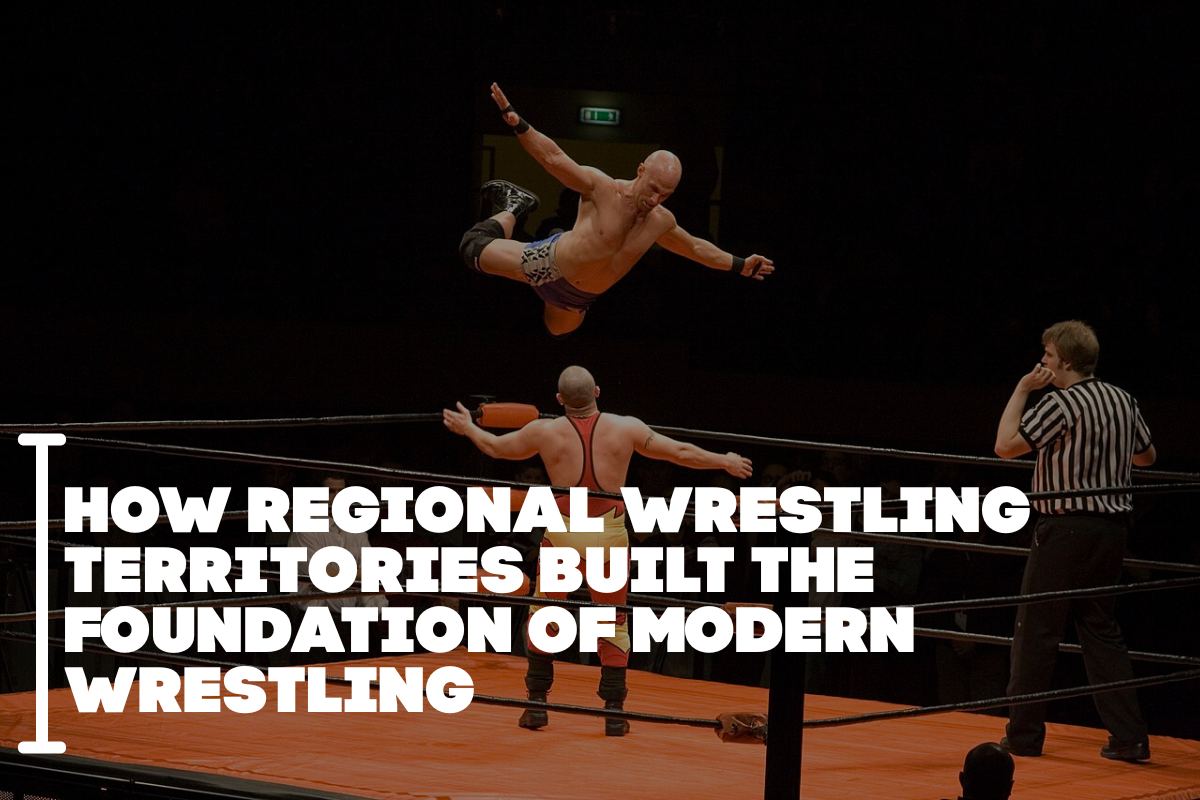
Before professional wrestling became a global, billion-dollar entertainment industry, it thrived as a territory-based system. From the 1940s through the early 1980s, wrestling promotions were divided geographically, each controlling a specific region, talent pool, and audience.
These territories laid the groundwork for modern wrestling—developing stars, refining storytelling, and establishing the business practices still used today. While many of these promotions faded or were absorbed, their influence remains deeply embedded in the industry.
The Wrestling Territory System Explained

The territory system was built on cooperation rather than competition. Promoters agreed not to encroach on each other’s regions, allowing local wrestling scenes to flourish. Wrestlers traveled from territory to territory, reinventing themselves and gaining experience while maintaining the illusion of legitimacy.
This system encouraged:
- Long-term storytelling
- Strong regional fan loyalty
- Continuous talent development
- Live-event driven revenue
Many of today’s biggest wrestling concepts were born in these forgotten territories.
National Wrestling Alliance (NWA)

The NWA was the backbone of the territory system. Rather than operating as a single promotion, it functioned as a governing alliance that unified regional territories under one championship structure.
Why it mattered:
- Created the traveling World Heavyweight Champion
- Ensured continuity and legitimacy across regions
- Set standards for booking, titles, and talent exchange
Legends such as Ric Flair and Harley Race became global stars by defending the NWA title across multiple territories, helping establish the idea of a “world champion.”
American Wrestling Association (AWA)

Based in the Midwest, the AWA was one of the strongest territories not headquartered in New York.
Key contributions:
- Emphasized realism and athletic credibility
- Produced stars like Hulk Hogan, Verne Gagne, and Jesse Ventura
- Introduced early sports-style presentation
Despite its eventual decline, the AWA influenced how wrestling blended athletic competition with character-driven entertainment.
Mid-South Wrestling
Mid-South Wrestling was known for its gritty, intense style and emotional storytelling.
Lasting impact:
- Developed future icons like Ted DiBiase, Jake Roberts, and Hacksaw Jim Duggan
- Popularized raw, emotionally charged promos
- Perfected long-term feuds that felt deeply personal
Its booking philosophy heavily influenced later national promotions and modern wrestling realism.
Stampede Wrestling
Operating out of Calgary, Stampede Wrestling was a global talent factory.
Why Stampede mattered:
- Trained technically elite wrestlers
- Produced Bret Hart, Owen Hart, Davey Boy Smith, and Chris Benoit
- Blended British, Japanese, and North American styles
Stampede’s emphasis on in-ring excellence helped shape the technical standards of modern professional wrestling.
World Class Championship Wrestling (WCCW)
WCCW revolutionized wrestling presentation in the southern United States.
Industry-shaping innovations:
- Early use of syndicated television
- Storylines based on real family dynamics
- Emotional, reality-driven narratives
The Von Erich family saga demonstrated how deeply personal storytelling could captivate audiences—an approach widely used today.
Georgia Championship Wrestling
Georgia Championship Wrestling was one of the first territories to understand the power of television distribution.
Key contributions:
- One of the earliest wrestling promotions on national cable
- Helped bridge regional wrestling to national exposure
- Played a critical role in wrestling’s media expansion
Its timeslot history directly influenced the eventual national takeover of wrestling television.
How These Territories Shaped Modern Wrestling
Though many of these promotions no longer exist, their influence is undeniable. They collectively:
- Built the talent pipeline for national promotions
- Established match psychology and promo structure
- Normalized weekly episodic storytelling
- Created the star-making touring model
Modern wrestling’s emphasis on character development, regional authenticity, and long-term storytelling can all be traced back to the territory era.
Why These Territories Were Forgotten
The decline of the territory system was driven by:
- National television expansion
- Aggressive consolidation by major promotions
- Rising production costs
- Changing audience consumption habits
As wrestling centralized, regional identities faded—but their foundations remained.
The Territory Legacy in Today’s Wrestling
Independent wrestling scenes, global partnerships, and even streaming platforms reflect a modernized version of the territory mindset. Wrestlers once again build reputations across multiple promotions, and fans explore diverse styles—echoing the past in a digital age.
Frequently Asked Questions (FAQs)
1. What was the wrestling territory system?
A regional system where promotions controlled specific geographic areas and cooperated to develop talent and storylines.
2. Why did the territory system end?
National television, consolidation, and changing media economics made regional exclusivity unsustainable.
3. Did modern wrestling stars come from territories?
Yes. Many legendary wrestlers were trained and developed in territories before becoming global stars.
4. Are there modern equivalents to territories today?
Independent promotions and international circuits function similarly, though without geographic exclusivity.
5. Why is the territory era important to wrestling history?
It established the business, storytelling, and talent development models that still define professional wrestling today.