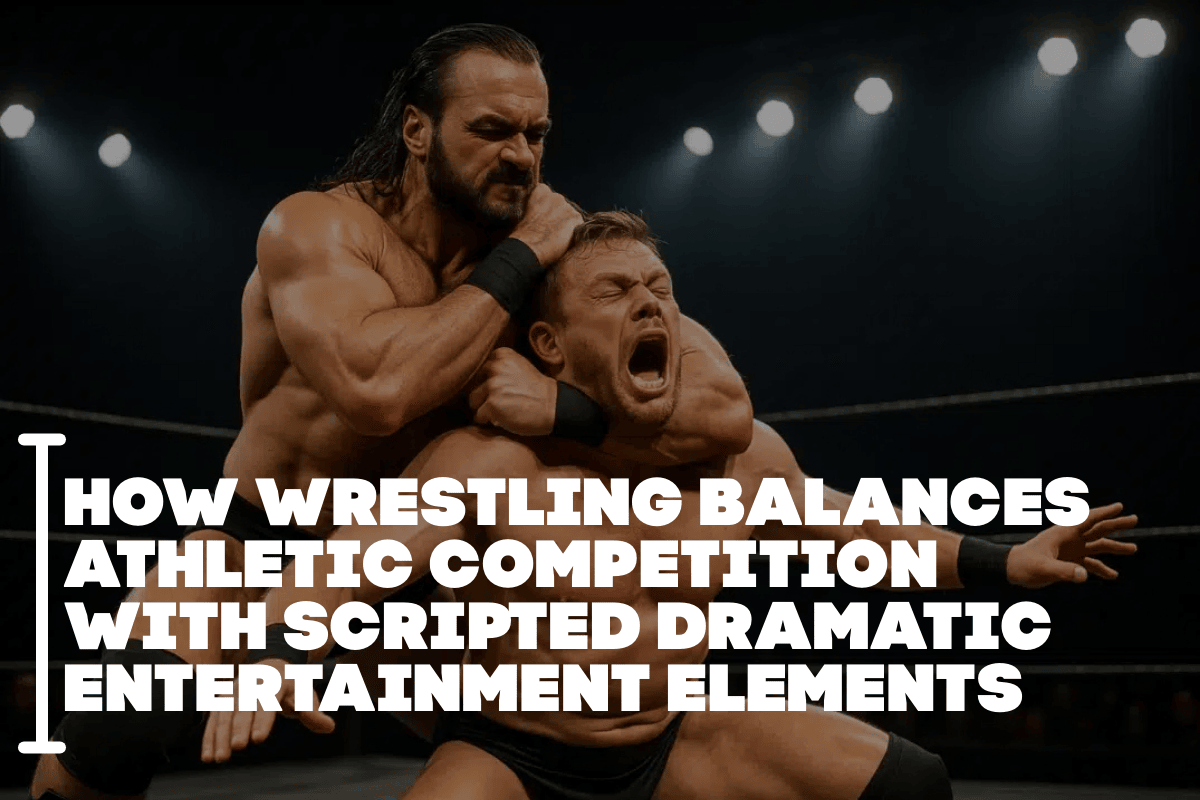
Wrestling balances athletic competition with scripted drama by demanding real physical feats within predetermined structures, using in-ring psychology to make choreographed action feel unpredictable and high-stakes. This hybrid—athletic theater—lets performers showcase genuine skill, endurance, and risk while advancing long-term narratives that hook fans emotionally.
Scripted Outcomes, Unscripted Execution
Outcomes and major spots are planned pre-match via producer notes, but wrestlers improvise chains, counters, and pacing live based on crowd reactions and chemistry. This ensures athletic credibility—suplexes, dives, and submissions require years of training—while story beats like false finishes build tension toward scripted climaxes.
In-Ring Psychology Blends Both Worlds
Technical sequences (shine, heat, comeback) mimic real fights: targeted limb work sells injuries realistically, hope spots create desperation, and comebacks reward resilience. Stars like Kurt Angle blend Olympic grappling with drama, proving athleticism elevates scripted spots without needing “no-sell” crutches.
Kayfabe Maintains Immersion
The illusion of competition (kayfabe) protects the drama—fans suspend disbelief because bumps hurt, matches exhaust, and botches happen. Promotions like NJPW lean athletic (tournaments test endurance), WWE emphasizes entertainment (cinematics, entrances), yet both demand peak conditioning to sell the hybrid convincingly.
Evolution Reflects Audience Demands
Territorial eras favored legitimacy (NWA technicians); Attitude Era amped drama (Austin brawls); modern AEW/NJPW hybrids prioritize workrate. Injuries and tours prove athletic toll, sustaining buy-in despite scripts.
Global and Cultural Adaptations

Puroresu (Japan) stresses athletic marathons, lucha (Mexico) aerial athleticism; all script drama around real risks, resonating worldwide.
FAQs
How are matches “real” despite scripts?
Improvised execution, genuine athleticism, and live risks make spots unpredictable.
What is in-ring psychology?
Storytelling via shine-heat-comeback to blend competition feel with narrative.

Why kayfabe matters?
Preserves emotional investment by blurring athletic truth and drama.
NJPW vs. WWE balance?
NJPW athletic-focused, WWE entertainment-heavy—both require elite fitness.
Botches’ role?
Prove physical reality, enhancing legitimacy amid scripts.